
Hi, I'm Matt Hoenig with EmpowerRM welcome back to our five part series on chargeback mistakes that cause revenue leakage for pharma manufacturers.
Today, we’re talking about mistake #5 (No Chargeback System), but before we do, don’t forget to like this video and subscribe to our channel so we can deliver more helpful content like this.
OK, so today we’re talking about chargeback mistake #5 (No Chargeback System).
This is one of the biggest mistakes we see pharma manufacturers make, and it’s the one that has the most potential for revenue loss.
What Is A Chargeback System?
So what is a chargeback system and what does it do? So there are three core things that every chargeback system should be able to do:

Contract Management (for both direct and indirect contracts)

Chargeback
Processing

Reporting
and Analytics
We’ll go into this more later, but for now, let’s see what it looks like when you don’t have a chargeback system.
No System Challenges
Like I’ve mentioned in the previous mistakes when you don’t have a chargeback system or EDI capabilities you’ll be placed on auto debit by the wholesaler. This means they will automatically take the deductions from your account and you will have no opportunity to dispute chargeback discrepancies because you cannot generate a properly formatted EDI 849 document.
Now let’s go over some of the additional challenges you have when you don’t have a chargeback system.
Manual Data Aggregation
So when you’re on Auto Debit you typically receive chargeback requests via email as CSV or Excel files, but they could also be PDF documents.
Once you receive these files from the wholesaler you would need to combine them in order to have a total picture of your chargebacks.
This becomes complicated because each wholesaler sends the information in a different format and now you need to manually rework and manipulate the data in order to line everything up and aggregate it together.
This requires a decent amount of manual effort, some technical savvy, and spreadsheet applications like Excel have row limitations and cannot be easily shared for reporting across multiple team members.
Also, chargeback data would be coming in daily, weekly, or monthly and you will need to repeat this process every time you receive a new file.
This process also leaves a lot of room for human error and you could end up with incorrect or invalid data that will cause reporting issues with government agencies.
Insufficient Validation

Once you have the data aggregated now you have to properly validate each line to see if there’s any discrepancies.
In order to do this, you need full price history on all your contracts along with their membership and you need to validate the product was sold to a valid member, at the correct price, for that specific invoice date.
This becomes an even bigger issue when you receive chargeback lines related to older invoices and can’t easily determine what the correct price or membership was at that time.
A chargeback system would run each chargeback line through 28 points of validation to determine whether there is a discrepancy or not.
Doing this manually is almost impossible.
This means if you’re doing manual validation that you will most likely miss discrepancies or possibly think that you have a discrepancy when you actually don’t.
No ERP Integration
Without a chargeback system credit memos would have to be created manually. Each chargeback request or debit memo from the wholesaler needs to have a corresponding credit memo in your accounting system for proper reconciliation.
Without this, it becomes almost impossible to reconcile a wholesaler remittance stateme.
No ERP Integration
Since the data is not stored in a centralized database, all reporting must be done manually. Based on the limitations of spreadsheets, over time this will become more and more difficult and at some point not even possible.
All of these challenges create lost revenue for pharma manufacturers. Whether it’s wasted time from manual processes, not being able to properly dispute chargeback discrepancies, or possibly sending incorrect data to government agencies.
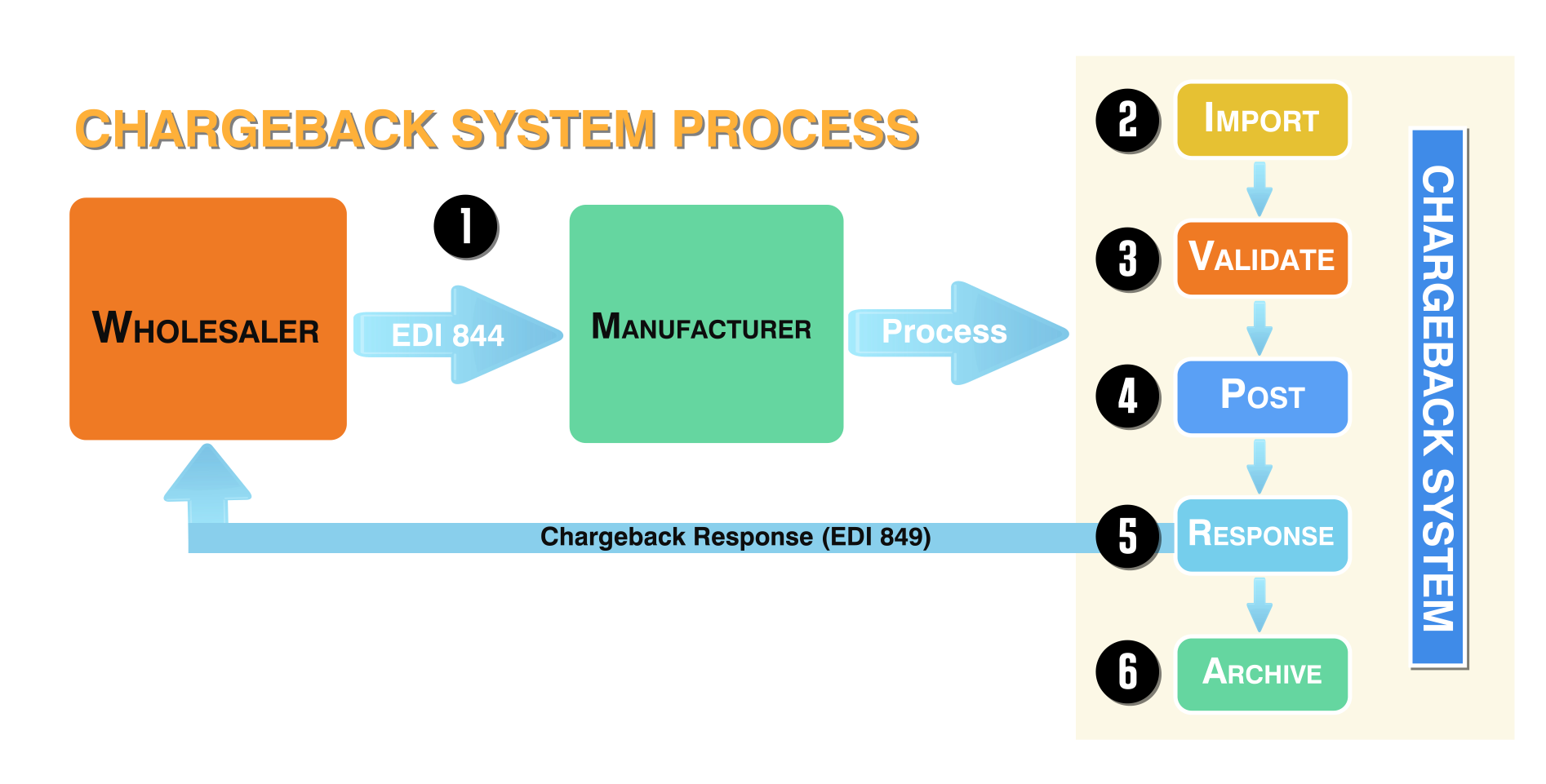
Chargeback System Process
Now let’s take a look at the process when you have a proper chargeback system in place with EDI capabilities.
- First the wholesaler sends the chargeback request via EDI 844 to the manufacturer.
- Next the chargeback data is automatically imported into the chargeback system and proper validation is run on every single line.
- If the system finds any discrepancies it will identify them as exceptions, automatically assign the appropriate HDMA dispute code, and wait for your review.
Once all the chargebacks are fully validated and all exceptions are handled now the chargeback system will automatically create credit memos in your accounting system. Each chargeback request or debit memo number will have a corresponding credit memo.
After that the chargeback system will generate the properly formatted EDI 849 document that needs to be sent back to the wholesaler.

If there are no disputes this document will just contain the credit memo number and the amount that you’re issuing which should equal the requested amount. If you’re disputing any lines, then the proper HDMA dispute code along with the line detail will be sent back to the wholesaler.
Therefore, our recommendation here is to implement A chargeback system as soon as possible. If you need help choosing a chargeback system you can check out our blog post on the top 8 factors when selecting a chargeback system. I’ll leave a link down in the description.
If you’re interested in exploring our chargeback system, EmpowerRM, please go to our website and schedule a demo.
So today we covered Mistake #5 (No Chargeback System) in our 5 part series. This is the final mistake in this series so I hope you enjoyed this content and found it helpful. Our goal at EmpowerRM is to help pharma manufacturers become more profitable and keep vital drugs in the marketplace. Go ahead and like this video and subscribe to our channel so you will be alerted when we release more helpful content like this.
It’s time to take control of your contracts. It’s time for EmpowerRM.